| Interviews
& Profiles Some Writings Links & Citations Early Day Comments Warning |
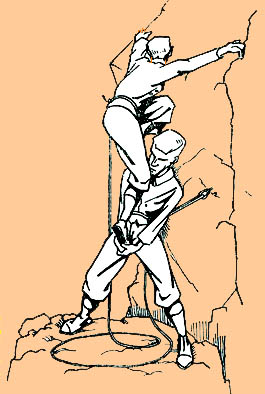 German Team: Two Bodies, One Climbing Unit - 1931 |
|
Reflections
& Commentary: Page 8
|
| Interviews
& Profiles Some Writings Links & Citations Early Day Comments Warning |
German Team: Two Bodies, One Climbing Unit - 1931 |
Interviews
& Profiles of John Gill
Internet :
Books:
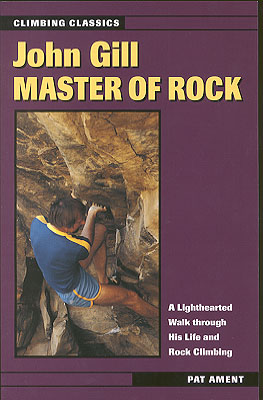
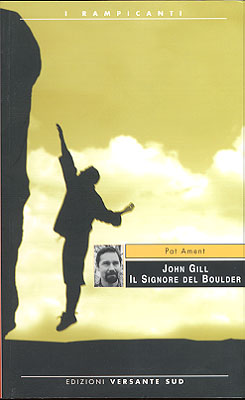
John Gill: Master of Rock, Pat Ament, Stackpole Press (1998) : [1st ed.(1977) , 2nd ed.(1991) , 3rd ed.(1998) , Japanese ed. , Italian ed.] , Stone Crusade , John Sherman, American Alpine Club Press (1994) Eiger Dreams, Jon Krakauer, Lyons & Burford (1990) Roc Starz:The Worlds Best Free Climbers, Heinz Zak, Rother Munich (1995) Escalada en Bloque, Héctor del Campo Allende, Ediciones Desnivel (2002) Better Bouldering, John Sherman, Chockstone Press (1997) Bessor Boulderen, Andi Hofmann, Tmms-Verlag, Korb (2007) Flash Training, Eric Horst, Chockstone Press (1994) Wizards of Rock, Pat Ament, Wilderness Press (2002) Climb, J. Achey, D. Chelton, B. Godfrey, The Mountaineers Books (2002) Training For Climbing, Eric Horst, Falcon Guide (2003) Stone Play, J. S. Watson, Stone Country Press (2007) The Ninth Grade: 150 Years of Free Climbing, David Chambre, Mont Blanc Press (2015) Magazines :
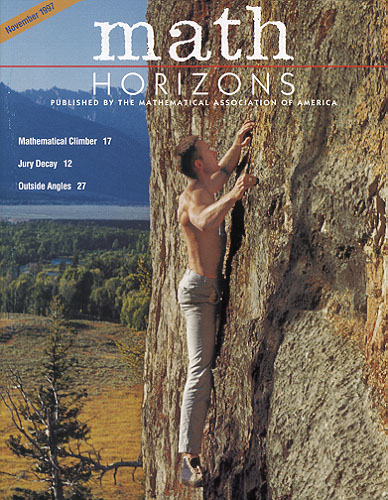
* MOUNTAIN(British), March/April 1977, "Pioneers of Colorado Free Climbing", by Bob Godfrey and Dudley Chelton * CLIMBING(USA), January/February 1978, "Pumping Sandstone" by John Long * FORT COLLINS MAGAZINE (USA), July/August 1980, "Bouldering" by Barbara Sherrod * OUTSIDE MAGAZINE(USA), February/March 1982, "Hard Rock Without Hardware", by Kief Hillsbery * SPORTSTYLE(USA), July 1983, "Bouldering in Boulder", by Jeff Long * IWA TO YUKI(Japan), October 1984, "Bouldering", Editors * NEW AGE JOURNAL(USA), March 1985, "The View From 30 Feet - John Gill", by Jon Krakauer * LOS ANGELES HERALD: CALIFORNIA LIVING(USA), November 10, 1985, "Between a Rock and a Long Drop", by Lori Karny * HIGH MAGAZINE(British), June 1986, "John Gill", by Jim Perrin * OUTSIDE MAGAZINE(USA), March 1989, "Let's Rock", by Doug Robinson * IWA TO YUKI(Japan), December 1992, "Following the Footmark of John Gill", by Motomu Tsuge * ROCK& ICE(USA), March 1993, "Whatever Happened to . . ." by Nancy Pritchard and George Bracksieck * FLASH COMMUNIQUE(USA), Summer 1993, "John Gill: Desire and Belief", by Eric Horst * ROC'NWALL(France), July 1995, "John Gill: Master of the Rock", by Lynn Hill * VBOULDERING(USA), Vol. 1, Issue 3, "John Gill: The Godfather of Bouldering Speaks", Editors * CLIMBING(USA), May/June 1996, "Reservoir Dogs: Bouldering at Horsetooth Reservoir", by Craig Luebben * ROCK& ICE(USA), July/August 1997, "the Golden Age - Brave New Boulderer", Fred Knapp * MATH HORIZONS(USA), November 1997, "John Gill - Mathematical Climber" by Jon Krakauer * ROCK& ICE(USA), October 1999, "Larger Than Life", by John Sherman * ROCK& ICE(USA), December 1999, "Heroes: 26 Who Inspired", Editors * CLIMBING(USA), Millennium Special: March 2000, "The Great Ascents: Bouldering - the Thimble 1961" by Gregory Crouch * CLIMBING(USA), Millennium Special: March 2000, "Ten Stars of American Climbing: John Gill, the Poetry of Mountaineering", byt Jeff Achey * ROTPUNKT, May/June 2000, "John Gill - ein Portrait Über den Master of Rock", by John Sherman * CLIMBING(USA), May 2000, "Pumping Sandstone: A Bouldering Lesson From the Master of Rock - John Gill", by John Long * KLETTERN(Germany), November 2003, "Master of Block: Interview with John Gill", by Alex Wenner * GÓRY(Poland), Lipiec/Sierpien 2003, "John Gill - Ojciec Bulderingu", by Piotr Droždž * MONTANA(Czech Republic), May 2003, "John Gill - a Gymnast on the Rock", by Piotr Droždž * OUTSIDER(Ireland), December/January 2004, "Profile: John Gill - 15 Feet in the Sky", Editors * ROCK& ICE(USA), June 2005, "Ten Who Influenced", Editors * ALPINIST(USA), Autumn 2005, "Faces: Giulio Malfer - John Gill", Editors * CAMPOBASE(Spain), April 2006, "Pioneros del Bloque", Editors * URBAN CLIMBER(USA), February/March 2006, "Homage: John Gill and Gymnastic Bouldering", by Justin Roth * HOOGTELIJN(Netherlands), February 2007, "John Gill, Grondlegger Van Het Boulderen", by Bep Maltha * CLIMB(British), September 2007, "Daddy of the Dyno: John Gill", by Colin Wells * ROCK& ICE(USA), September 2007, "He Who Must be Named - John Gill", Editors * ROCK & SNOW (Japanese), Spring 2015, "First Problems at Each Grade - John Gill" Films : Silent Climber (1978) , On the Rocks (1980), The Best of Horsetooth Reservoir Bouldering (2000), Friction Addiction - Black Hills Gold (2003). Bachar (2005), Disciples of Gill (2011) CD: Masters of Rock - Interviews with Chris Sharma, Steph Davis, and John Gill (2005) Various Newspapers. |
|
Climbing Writings The Art of Bouldering , Journal of the Amer. Alpine Club (1969) Bouldering & Rock Climbing: a Brief Comparison , Summit Magazine (1969) Bouldering in the South , Climbing Magazine Notes on Bouldering - The Vertical Path , Climbing Magazine, No. 59 An Excerpt. . . , The Climbing Art, No. 23 The Quiet Towers , The Climbing Art, No. 2 A Retrospect on Training , The Climbing Art, No. 4 Scrambles in the Tetons , The Climbing Art, No. 18 Reflections of a Middle-Aged Boulderer , [Invited Address, British Mtng Council bi-annual Conf, Buxton, 1986] , and Mountain Magazine No. 110 Reflections of a Boulderer , [Invited Address Annual Meeting of the Amer. Alpine Club (1986)] . Bouldering: A Mystical Art Form , The Mountain Spirit , Tobias & Drasdo, Overlook Press(1979) Introduction , Stone Crusade, J. Sherman, AAC Press Bouldering in the Black Hills , Touch the Sky, P. Piana, AAC Press Various passages, John Gill: Master of Rock, Pat Ament, Stackpole Books (1998) Various passages, Wizards of Rock, Pat Ament, Wilderness Press(2002) Tit for Tat , Alpinist 15 Spring 2006 |
| To
correspond
with
me,
send an e-note to johngill1 at live dot com |
 |
A
Few Citations . . .
“The Father of Modern
Bouldering” ( Stone Crusade
- a Historical Guide to Bouldering in America , Rock
& Ice, Rotpunkt, Climbing, Desnivel.com, rockclimbing.com,
VBouldering, Gory, Training For Climbing ,
seclimbers.org, 8a.nu, Escalada en Bloque ,
Better Bouldering , et al
. . . )
“The Father of Training For Rock Climbing” ( Training For Climbing ) Horsetooth Achievement Award (1995)
Climbing [the
Milleneum Special] : Thimble climb
cited as one
of
the
"Eight Top Climbing Achievements
of the Century" .
Climbing [the Milleneum Special] : One of "Ten Stars of American Climbing" . Rock & Ice [December 1999] : One of "Heroes: 26 who Inspired" . Outsider Magazine (Irish) [January 2004] : Welcomed as the first member of the Outsider Hall of Fame . Rock & Ice [June 2005] : one of "Ten Who Inspired" . Mountain [1986] : " . . . Legendary Master of Rock " Summit [1969] : " A supreme virtuoso . . . of boulders and small rock faces " Alpinist #12 [2005] : ". . . his introduction of chalk and dynamic movement marked the beginning of modern climbing in America." Etc . . . |
From the
Early Days . . .
"On Arrival I found a large crowd of natives expecting me; men had come from far and wide in order to show their climbing powers and gain unheard-of wealth" - Oscar Eckenstein, speaking of a bouldering competition he conducted in the Karakorams in 1893 "Two experienced men had struggled with much display of science up a short but difficult cleft, when this gentleman, after watching them critically, called out,'But why don't you chaps do it this way?' and forthwith ran up the cliff after the manner of a cat storming a garden wall, quite heedless of the fact that he ought to have had nails on his boots. This gentleman must be kept out of the Climbers Club at all hazards, for climbing will soon cease to be an art if our pet scrambles are to be massacred in such unceremonious fashion." - E. A Baker in Moors, Crags, and Caves . . . (1903) "After lunch
we walked down Grisedale together and when
passing a rock we E. P. Haskett Smith initiated the sport of rock climbing in England in the 1880s. At first he avoided using a rope, thus setting the stage for free soloing. Owen Glynne Jones sometimes top-roped a hard pitch before leading it, incurring angry reprimands by Aleister Crowley (ca.1890-1900). Instead of climbing from bottom to top, Siegfried Herford downclimbed some of his difficult pitches first, belayed from above (ca.1910-1914). J. M. Archer Thomson refrained from either top-roping or downclimbing (ca. 1890-1916). These were four giants - and four climbing styles - in the early history of rock climbing. |
| Warning
: The information on this site is in no way designed to encourage or condone participation in any aspect of climbing, particularly solo climbing. Climbing is a dangerous activity and free-soloing is exceptionally dangerous. Seek competent professional instructionand advice before you even think of stepping off the ground! The material presented here is of a purely biographical & historical nature. |